Blog

List of articles

Biological Integrity and Sarcoids: Why Systemic Support is the Key to Success?
Sarcoids in horses are not merely a local skin issue. From the perspective of modern veterinary science and biohacking, they represent a failure of immune surveillance over transformed cells. To reverse this condition, attacking only the surface is not enough. We must change the host's biological environment.

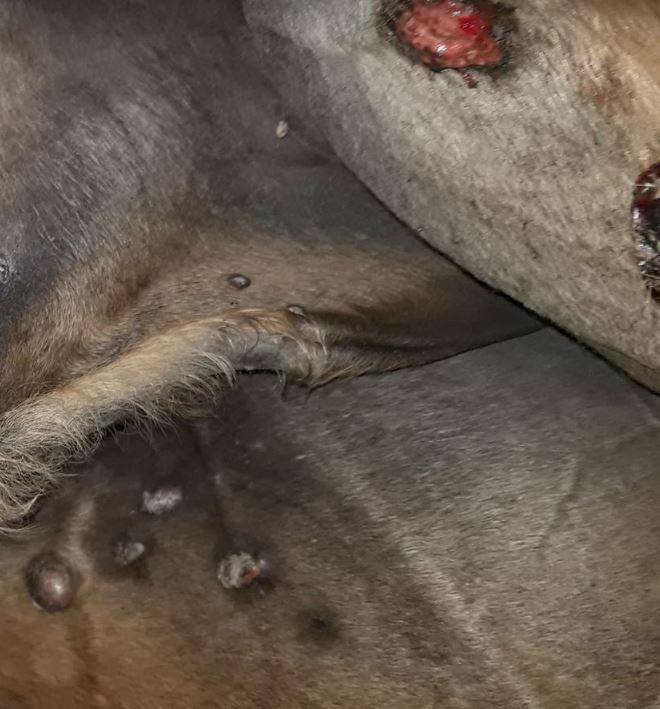
At Crystalina, we approach equine health through the optimization of internal processes. Our results, documented by owners in the attached photographs, are proof of what a horse's body can achieve when given the right conditions for regeneration.

Three Pillars of Support with Crystalina Horses Anti Sarcoid

The foundation of our formula is highly activated and modified zeolite (clinoptilolite). Thanks to unique processing, we maximize its bio-activity in three critical areas:

1. Selective Adsorption (Internal Cleansing)

Chronic inflammation, often fueled by invisible enemies such as mycotoxins from feed, keeps the horse's immune system in a state of constant overload. Crystalina acts as an intelligent "molecular sieve," eliminating these burdens directly within the digestive tract. The released metabolic capacity can then be fully focused on healing processes.

2. Immune Response Support

Sarcoids thrive where the immune system is "blind." Activated clinoptilolite positively influences the environment of the gut barrier (GALT), where up to 70% of immune cells reside. Proper stimulation of this environment helps the organism better identify and respond to pathological tissue changes.

3. Microenvironment Homeostasis

Healthy cells require stability. By adjusting mineral balance and stabilizing internal pH, Crystalina creates an environment that is unfavorable for the uncontrolled growth of anomalous cells. In our clients' photos, you can see this process as gradual "drying out" and natural skin regeneration without aggressive external interventions.

Progress Analysis: What Does Practical Experience Show?

Looking at our clients' documentation, we see clear progress: from active, bleeding lesions, through a stabilization phase, to final re-epithelialization (skin renewal). This process is not accidental—it is the result of systematic strengthening of the horse's biological resilience.

Conclusion: Crystalina Horses Anti Sarcoid is not just another supplement. It is a tool for the owner seeking a path of deep regeneration and wishing to restore their horse's comfort naturally.

Winter Coats in Horses: Hidden Risks and How to Prevent Skin Conditions

Winter Coats in Horses: Hidden Risks and How to Prevent Skin Conditions

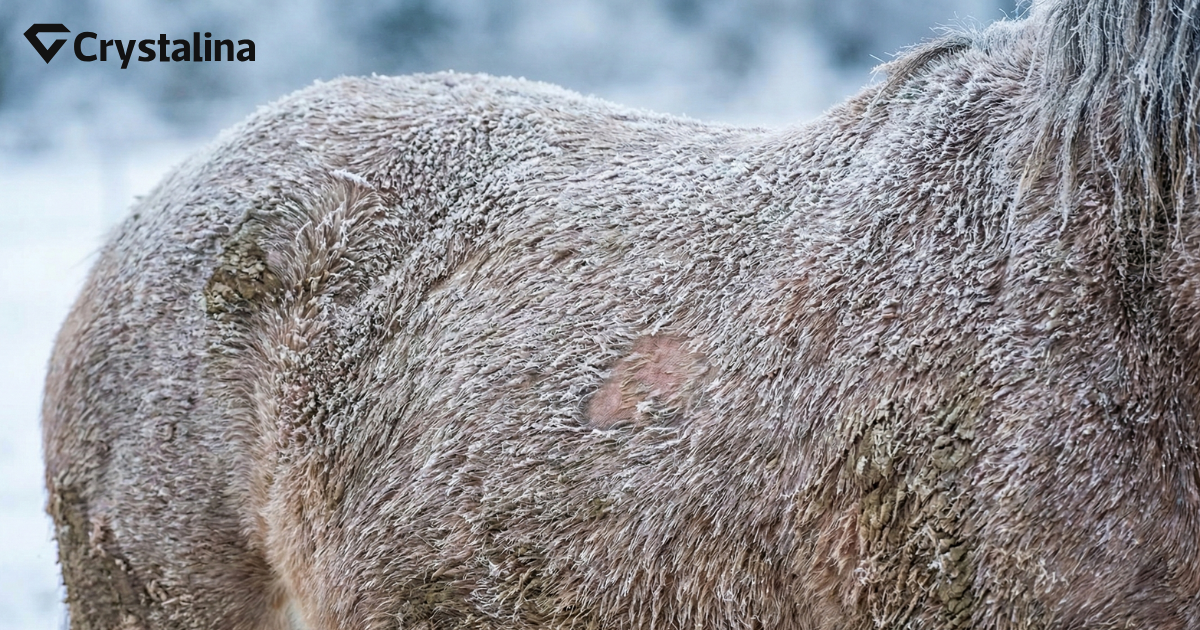
With the arrival of the cold months, every horse's physiology changes. The most visible change is the growth of a thick winter coat, serving as a perfect thermoregulatory mechanism. While this "winter gear" is crucial for survival in nature, it brings specific challenges for sport or leisure horses in regular work.

Many owners do not realize that the combination of long hair, sweat, and a damp winter environment creates an ideal microclimate on the skin for the development of unwanted pathogens.

Why is the winter coat risky?

In winter, a horse's skin "breathes" with more difficulty than in the summer months. The problem arises especially if the horse is rugged (blanketed) or sweats during work and dries too slowly due to the thick undercoat. Heat and trapped moisture directly on the skin create an ideal incubator for bacteria and fungi.

If moisture does not evaporate quickly enough, the skin's natural protective barrier is compromised, opening the door to infections. The most common winter nightmares include:

1. Rain Rot (Dermatophilosis) Although we often associate this condition with "mud fever" on the legs, in winter it frequently appears on the back, neck, and croup – exactly where the rug sits or where rain runs off.

  • How to spot it: It looks like small scabs firmly stuck to the hair (resembling a paintbrush). When removed (often with a tuft of hair), raw, weeping, and painful skin is revealed underneath.

  • Cause: Prolonged moisture and steaming of the coat under a rug.

2. Ringworm (Dermatomycosis) Fungal infections are on the rise in winter months because horse immunity can be weakened, and the lack of solar UV radiation favors fungal spread.

  • How to spot it: It manifests as circular hairless patches, often with grey scales at the edges. Beware, they are highly contagious and transmissible to humans too.

  • Risk: Spreads by sharing grooming kits, saddle pads, rugs, or through direct contact in the herd.

5 Principles of Winter Coat Care

Prevention is always cheaper and easier than treating a developed infection. By following these five steps, you will significantly reduce the risk of skin problems in your stable.

1. Checking under the rug is mandatory Even if you aren't riding that day, the rug must be taken off every single day. It is essential to visually and physically check if the horse isn't overheated, if the rug isn't rubbing the shoulders or withers, and if suspicious lumps or scabs aren't forming in the coat.

2. Never rug a wet horse This is the golden rule. If the horse is sweaty after riding, it must dry completely before getting a stable or turnout rug. Moisture trapped under a waterproof layer has nowhere to escape.

  • Use high-quality cooler rugs (sweat sheets) that effectively wick sweat to the surface.

  • If the horse has an extremely thick coat and works regularly, consider clipping.

3. Own grooming kit for every horse In winter, fungi and bacteria spread quickly and invisibly. The basis of hygiene is that every horse has its own set of brushes. If you suspect a skin problem, disinfect the brushes immediately and do not use them on other horses.

4. Support from within Healthy skin starts in the gut. In winter, horses lack fresh grass, which is a natural source of vitamins. To support the skin barrier function and coat quality, it is crucial to supplement:

  • Zinc and Copper (support skin regeneration).

  • Biotin (strengthens coat and hooves).

  • Vitamin E and oils (improve skin elasticity and immunity).

  • Suitable nutritional supplement: Crystalina Horses.

5. Regular grooming (even when not riding) A thick winter coat traps dust, dander, and dead skin, which bind moisture. Even if the horse looks clean, going over them with a rubber curry comb is essential. The massage stimulates blood circulation in the skin, supporting natural immunity and mechanically removing dirt that could serve as a breeding ground for fungi.

Winter doesn't have to be a burden for your horse's skin if you pay attention to the details. Regular checks, thorough drying, and quality nutrition are the keys to welcoming spring with a healthy and shiny horse.

Sarcoids in Winter: The False Sense of Security That Strikes Back in Spring

Sarcoids in Winter: The False Sense of Security That Strikes Back in Spring

Winter in the stables may bring a sense of calm, but your horse’s body could be harboring an “enemy” that shouldn’t be underestimated: sarcoids, the most common skin tumors in horses.

Many horse owners know the story: in autumn, your horse develops a small, inconspicuous lump. Winter arrives, the coat grows thick, and the lump seems unchanged—or is completely hidden under the “winter coat.” A false sense of security sets in… until spring.

Why do sarcoids seem to “sleep” in winter? 😴

Sarcoids are caused by bovine papillomavirus. While research continues into their exact behavior, their seasonal patterns are clear. Here’s why they appear dormant in winter:

  • No vectors, no spread: Flies are the main culprits in irritating and spreading sarcoids. In winter, flies are inactive. Without insect activity, existing lesions remain undisturbed, keeping the virus relatively dormant.

  • Camouflaged by winter coat: Thick winter hair can easily hide small, flat (occult) sarcoids. Out of sight, out of mind—but only temporarily.

  • Slower metabolism: Cold weather can slow metabolism and reduce skin blood flow, which may temporarily slow tumor growth.

Spring Awakening: An Unwelcome Surprise 🌩️

As temperatures rise and you groom away the dense winter coat, the real shock often hits. Flies emerge with the first warm days, seeking moist areas, eyes, nostrils—and those hidden sarcoids. Their activity wakes the dormant virus.

Irritation can trigger rapid growth of existing sarcoids, often transforming calm, flat lesions into aggressive forms. Flies can also spread the virus to minor scratches on the skin, creating “new colonies.”

By spring, a horse that had a single small wart in autumn may suddenly have five, with the original lesion tripling in size.

Don’t Let Sarcoids “Sleep” Through Winter 🛡️

Ignoring sarcoids in winter is a common mistake. Dormancy doesn’t mean disappearance. In fact, this quiet period is the perfect time to prepare your horse’s body for the upcoming challenge.

  • Boost immunity from within: A strong immune system is key to keeping the virus in check. Winter is the ideal time to provide targeted support. Crystalina Horses Anti Sarcoid is specifically formulated to help your horse’s body fight skin lesions and strengthen natural defenses before spring arrives.

  • Check regularly: Feel for lumps in high-risk areas. Treating a small, “sleeping” sarcoid in January—through local therapy or supplements—is far easier than tackling a large, bleeding tumor in May.

  • Plan for spring: Have a fly-protection strategy ready before the first insects arrive. Preventing fly contact is essential to stopping the spread of sarcoids.

👉 Prepare your horse for spring today with Crystalina Horses Anti Sarcoid.

Why choose Crystalina?

The Crystalina brand was created out of a need to improve the health of our beloved pets—especially in situations where even multiple visits to the vet no longer helped. Based on our previous experience and especially through the research and development of certain products originally intended for human use, we developed Crystalina nutritional supplements for dogs, horses, and cats through a special physical process and careful formulation.

The main goal is to detoxify the body, reduce the overall burden on the organism, and activate the animal’s own immune system so that it can deal with health problems naturally. Our supplements are continuously tested and improved. Additionally, they are great for preventive use.

There is, however, one important truth: as the saying goes, "We are what we eat"—and this applies to animals as well. The market is flooded with all kinds of pet foods, treats, and supplements, but the vast majority are of poor quality. That's why we decided to create products that meet the highest standards and are as close to nature as possible.

That’s how our meat-based canned food and dry food (kibble) came to be. Our kibble is produced through gentle drying—not extrusion, which can destroy many vitamins and minerals. After all, if our pets are to be healthy, they need to eat healthily too.

And that’s what Crystalina is all about. 

Air Quality in Riding Arenas: New Findings for Horse and Rider Health

Your horse's health is paramount to us. And yours is just as important. Today on our blog, we're looking at an often-overlooked aspect – air quality in indoor riding arenas. A recent study has brought interesting findings about the bacterial load in the air of riding arenas and its potential impact on both horses and riders. You might think that an indoor arena isn't as dusty as outdoors, but the opposite can be true!

What did the study find? Scientists thoroughly analyzed the air in four different indoor riding arenas throughout the year. They focused on the presence of bacteria before and after riding with one horse. The results were quite surprising:

  • The amount of bacteria in the air significantly increased after riding. The movement of the horse and the disturbance of the arena surface contribute to the release of microorganisms into the air.
  • The concentration of bacteria was similar in the breathing zone of riders (2.5 m) and horses (1.5 m). This means that the potential risk of inhalation is similar for both.
  • Gram-positive bacteria predominated, especially various species of the genus Staphylococcus, with Staphylococcus xylosus accounting for up to 80% of them.
  • The main source of these bacteria was likely the arena surface. The footing that horses walk and run on can thus be a reservoir for microorganisms.

Why should this concern us? You might now be wondering what this actually means for us and our horses. Increased bacterial load in the air can have potential negative effects on the respiratory system of horses:

  • Irritation of the respiratory tract and increased mucus production.
  • Worsening of symptoms in horses with existing respiratory diseases (RAO, IAD).
  • Potential increased susceptibility to secondary respiratory infections.
  • Reduced performance due to impaired breathing.

Although the study did not directly examine the impact on riders, it is logical to assume that long-term exposure to increased amounts of bacteria and dust particles may not be ideal for our health either.

What can we do about it? Even though we don't have direct control over the bacterial load in every riding arena, there are steps that can help improve air quality and minimize potential risks:

  • Regular watering of the arena surface: A moistened surface creates less dust and releases fewer particles into the air.
  • Good ventilation of the riding arena: Ensuring air circulation helps to remove dust and microorganisms.
  • Using quality bedding in stables: Reducing dust in stables can also impact the air quality in adjacent riding arenas.
  • Regular maintenance and cleaning of the riding arena.

In our e-shop, you will find products that can help you care for your horse's health:

  • Crystalina nutritional supplements, which aid in detoxification, regeneration of the body, and the removal of acids, toxins, and waste substances from the body.
  • Herbs suitable for healthy lungs.

We believe that awareness is the first step towards better care for our horses. Even seemingly inconspicuous factors, such as the air quality in a riding arena, can have a significant impact on their health and well-being.

Listing controls

5 items total